
introduction:
Children learn best when the process is enjoyable. Opposite words for kids make language learning simple and fun. An opposite word has a meaning that is completely different from another, such as hot and cold or big and small. These word pairs help children expand their vocabulary, understand contrasts, and describe the world more clearly. They also teach how words relate to each other, which strengthens overall language skills.
Parents and teachers can make lessons exciting by incorporating games, stories, and colorful visuals. This hands-on approach helps children remember words more effectively. In this article, we explore lists of opposite words for kids, fun activities, and teaching tips, including tables with examples for quick reference. These methods turn learning into a joyful and engaging experience for young learners.
Opposite Words for Kids – A Fun Way to Learn Language
Understanding Opposite Words for Kids
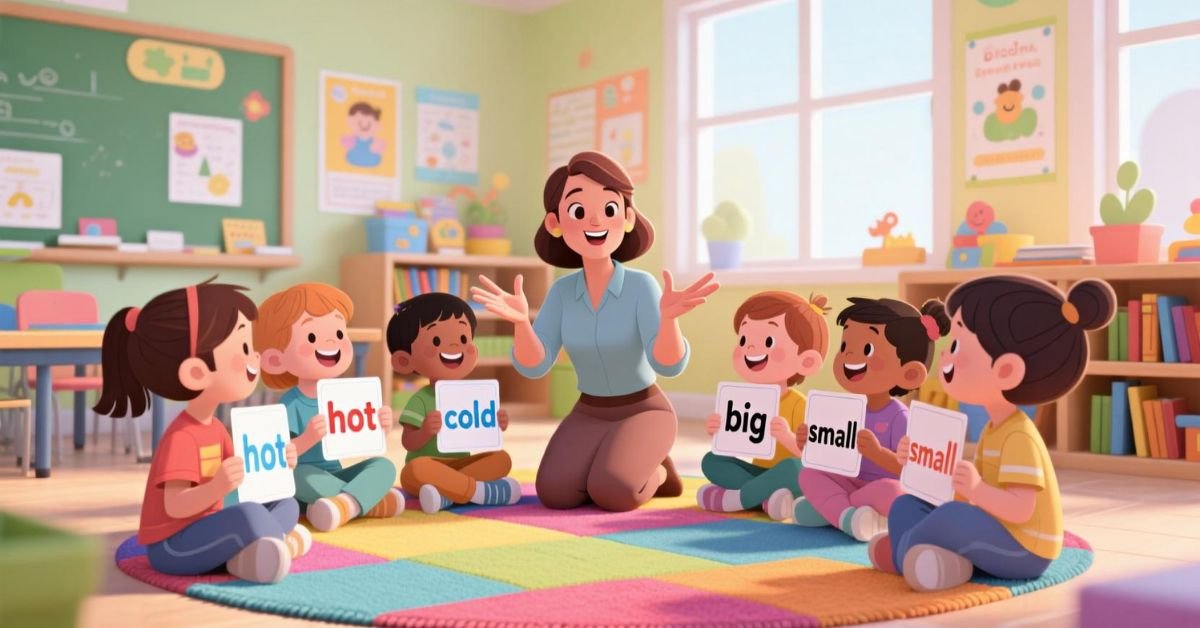
Opposite words are word pairs with meanings that are entirely different from each other. Children can understand them quickly because they are easy to visualize. For example, when you say day and night, kids can picture both. This method helps children develop a strong vocabulary and enhances their ability to describe things accurately. Teachers often introduce opposites early in language lessons because they make concepts easier to grasp. Parents can use daily life examples to teach these words. If your child drinks a hot cup of milk, you can contrast it with cold water. Such real-life situations help the brain connect words with experiences. Kids also enjoy learning in a playful setting. Therefore, mixing games, flashcards, and songs with lessons can make the learning process exciting. Opposite words for kids not only improve vocabulary but also strengthen thinking skills.
Why Opposite Words for Kids Are Important in Early Learning
Knowing opposites helps children grasp the idea of differences and contrasts. This skill is useful in reading, writing, and everyday conversations. Kids often learn faster when they see or experience both words in action. For example, watching a balloon rise and then seeing it fall teaches them up and down naturally. By practicing opposite words for kids, they become better at forming sentences. Opposites also improve comprehension because they show relationships between ideas. In storytelling, knowing opposites makes descriptions richer and more colorful. For instance, a character can be happy in one scene and sad in the next. This contrast makes stories more interesting. Children who know opposites can also understand instructions better. If a teacher says Stand up and later says Sit down, the child recognizes the change in action. These skills stay with them as they grow and help them in all subjects.
Common Opposite Words for Kids in Daily Life
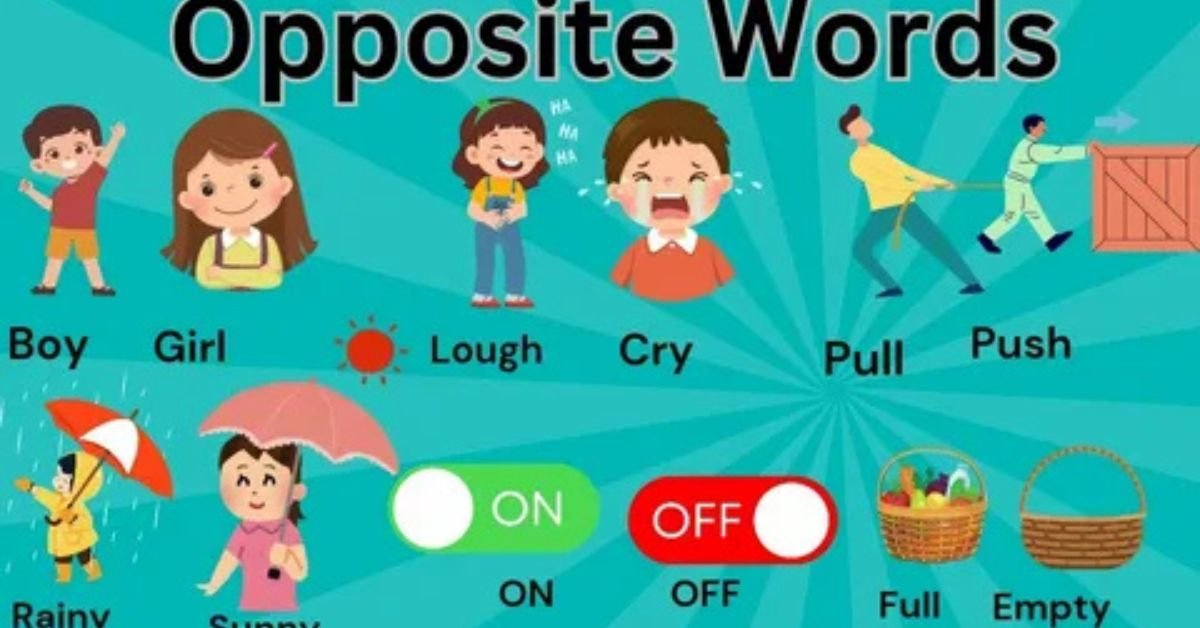
Daily life offers many opportunities to teach opposites. When you open a door and close it later, you can point out the opposite actions. Kids love to connect words with real actions. Here is a table of simple opposite words for kids that are common in everyday life:
| Word | Opposite |
|---|---|
| Big | Small |
| Hot | Cold |
| Fast | Slow |
| Up | Down |
| Day | Night |
| Happy | Sad |
| Wet | Dry |
| Open | Close |
| Near | Far |
| Light | Dark |
These examples are easy to show and explain. Parents can use toys, objects, or even actions to make the meaning clear. For instance, turning the lights on and off teaches light and dark instantly. Using such simple examples daily helps children remember opposite words for kids without pressure.
How to Introduce Opposite Words for Kids
The best way to introduce opposites is to keep lessons short and interactive. Children have short attention spans, so they respond well to quick activities. Start with a small set of opposite pairs and repeat them often. Use clear examples they can see, touch, or hear. To teach the word loud, you can clap your hands. Then contrast it with quiet by whispering. This sensory approach keeps kids engaged. Storybooks are another powerful tool for introducing opposite words to kids. Many picture books are designed to show contrasts in a fun way. Reading these stories aloud while pointing to pictures helps children connect meaning and visuals. You can also create a small opposite words corner at home with flashcards. Each card can have one word on one side and its opposite on the other. Kids love flipping them over and discovering new words.
Using Games to Teach Opposite Words for Kids
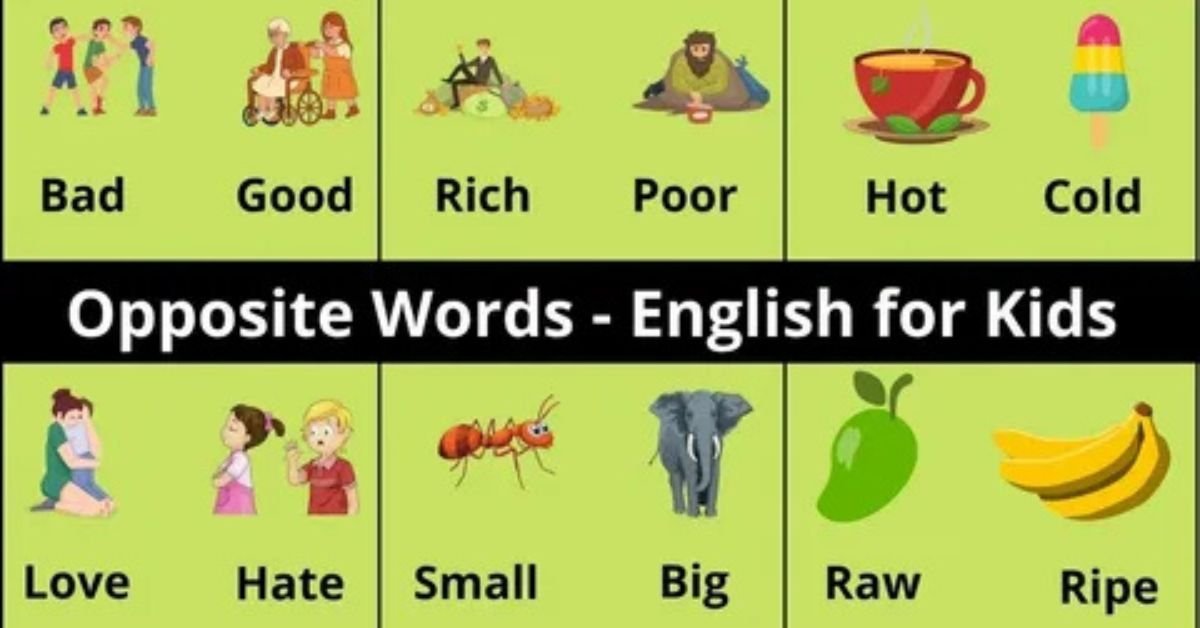
Games make learning opposite words exciting. Children remember better when they play while learning. You can create a simple matching game where kids match a word with its opposite. For example, give them the word happy and ask them to find sad from a set of cards. Another fun game is the action game. Tell kids to stand up when you say up and sit down when you say down. Such activities bring energy into the lesson. You can also use a scavenger hunt-style game. Hide objects that show opposites, such as a light object and a heavy one. Ask kids to find and name them. Online games and apps can also be useful for teaching opposite words to kids. Many educational websites offer free interactive activities that make learning engaging. These methods help children learn new words while having fun at the same time.
Storytelling with Opposite Words for Kids
Stories are powerful tools for teaching language. They allow children to hear opposite words in context. A story can have a tall character and a short one, or a happy moment followed by a sad one. This contrast keeps the story interesting while reinforcing vocabulary. Parents can create simple bedtime stories that include several pairs of opposites. For example, once upon a time, a big cat met a small mouse. The cat was fast, but the mouse was slow. Such sentences help children remember both words easily. Telling stories also motivates children to use the words on their own. You can ask them to tell their own stories using opposite pairs they know. Drawing can be added to the activity to make it even more fun. For example, they can draw a sunny day and then a rainy one to show sunny and rainy.
Opposite Words for Kids in the Classroom
Teachers have many ways to make opposite words lessons fun in class. They can start the day with an opposite of the day challenge. Each day, a new word pair is introduced, and students find examples around them. Group activities also work well. Children can work in pairs to act out opposites, such as push and pull or open and close. Classroom walls can have colorful opposite words charts for quick reference. Teachers can also organize opposite word quizzes at the end of the week. This encourages kids to remember what they have learned. Art projects, such as drawing or coloring opposite scenes, are also very effective. For example, drawing a big tree next to a small plant reinforces the idea of big and small. With creative teaching methods, opposite words for kids become an enjoyable part of learning.
Fun Activities to Practice Opposite Words for Kids
Children learn faster when lessons feel like playtime. You can turn opposite words for kids into a fun daily activity without them even realizing they are learning. One easy activity is the Opposite Walk. Call out a word like fast and ask your child to walk quickly. Then change to slow and see them move at a slower pace. Do you like this personality? Another activity is the Opposite Hunt. Give them a word, such as hot, and ask them to find something in the house that is cold. Acting out opposites like stand and sit, or open and close, turns learning into movement-based fun. Music can also help. Create a song using opposite pairs, and sing it together. Children often recall words more easily when they are set to a catchy tune. This approach also works well for group learning, as children enjoy doing these actions together.
Visual Learning for Opposite Words for Kids
Visuals make a big difference when teaching children. Children remember words more easily when they can see them. For opposite words for kids, you can use colorful flashcards, posters, or picture books. A flashcard with a picture of the sun for day and the moon for night makes the meaning clear instantly. Posters in classrooms or study rooms act as constant reminders. Picture books often present opposite sides by side, making them easy to compare. You can also design your own visual aids at home. Take two jars, one filled with water (wet) and one empty (dry), and label them. This simple display helps kids connect the word with the object. Technology can also help, as many learning apps use animations to show opposite actions like run and stop. The more senses you engage in learning, the better children remember.
Building Sentences with Opposite Words for Kids
Once kids learn the basic meaning of opposites, the next step is to use them in sentences. This activity helps develop vocabulary as well as grammar skills. Start with short sentences, such as The soup is hot, but the juice is cold. Encourage your child to make their sentences using different pairs. Try a sentence challenge by giving one word and asking them to use it along with its opposite in the same sentence. For example, you say Happy, and they say, I am happy when I play, but sad when it rains. Such exercises make opposite words for kids more memorable because they use them in real communication. Writing activities work well too. Kids can create a short story or a few sentences that include several pairs of opposites. Over time, they will naturally include these words in daily speech.
Opposite Words for Kids – Extended Vocabulary List
Adding more words to the list helps children go beyond just the basic opposites. Here is a table showing common and some slightly advanced opposite words for kids:
| Word | Opposite |
|---|---|
| Above | Below |
| Alive | Dead |
| Always | Never |
| Arrive | Depart |
| Begin | End |
| Brave | Afraid |
| Clean | Dirty |
| Empty | Full |
| Inside | Outside |
| Laugh | Cry |
| Long | Short |
| Many | Few |
| Push | Pull |
| Rich | Poor |
| Strong | Weak |
| Sweet | Sour |
| Thick | Thin |
| Win | Lose |
| Young | Old |
Including both simple and slightly advanced pairs gives children a strong base for future learning. You can introduce these slowly over weeks so they have time to remember them well.
Opposite Words for Kids Through Real-Life Experiences
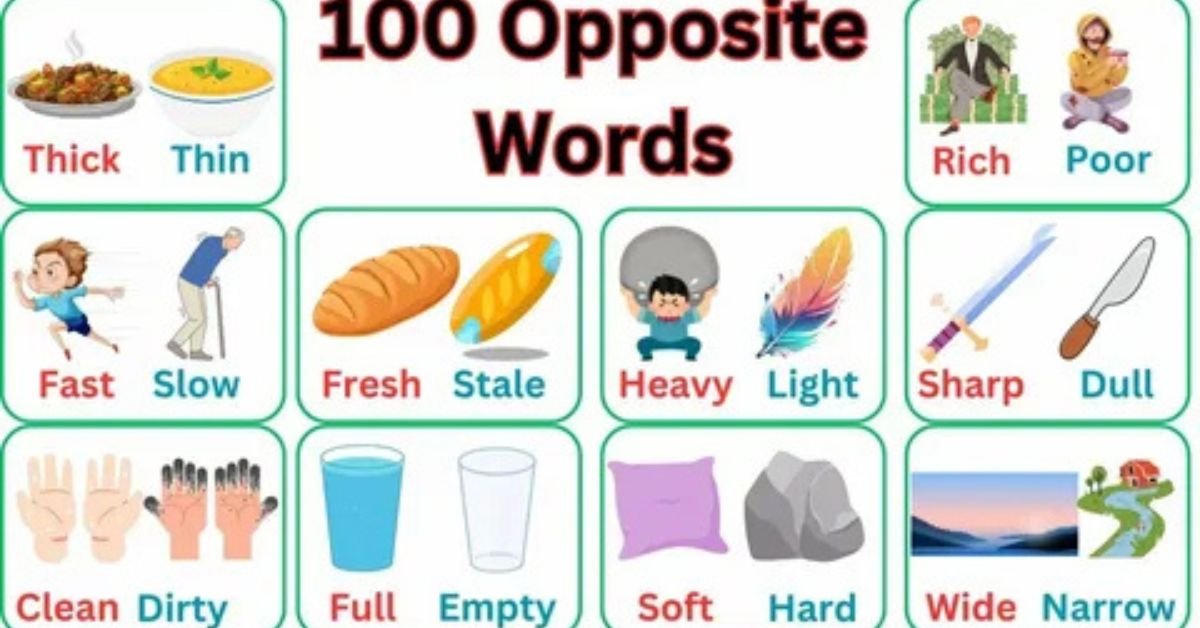
Real-life situations make learning natural. Parents can use moments during the day to teach opposite words for kids without formal lessons. When it’s sunny outside, you can say, Today is sunny, but yesterday was rainy. At the dinner table, you might say, Your glass is full, but mine is empty. This constant exposure in a familiar setting makes it easier for children to understand and remember. In the park, you can point out a tall tree and a short one nearby. On a trip, you might notice a fast car passing a slow one. These small moments add up over time. The best part is that kids don’t feel like they are studying. Instead, they see learning as part of life, which keeps them curious and motivated.
Challenges Children Face When Learning Opposite Words
While many children learn opposites quickly, some may face challenges. One common issue is confusion between similar-sounding words. For instance, the word light can mean ‘not heavy’ or ‘not dark,’ and each meaning has a different opposite, even though they sound the same. To address this, it’s important to teach words within their proper context. Another challenge is remembering too many pairs at once. Children may mix them up, so it’s better to teach a few at a time. Some kids may also struggle with abstract opposites like honest and dishonest, which cannot be shown physically. In such cases, use stories or role-play to make the meaning clear. Patience is important, as every child learns at a different pace. Encouragement, repetition, and fun activities help overcome these difficulties. By turning learning into a playful experience, children will master opposite words for kids without stress.
Tips for Parents and Teachers
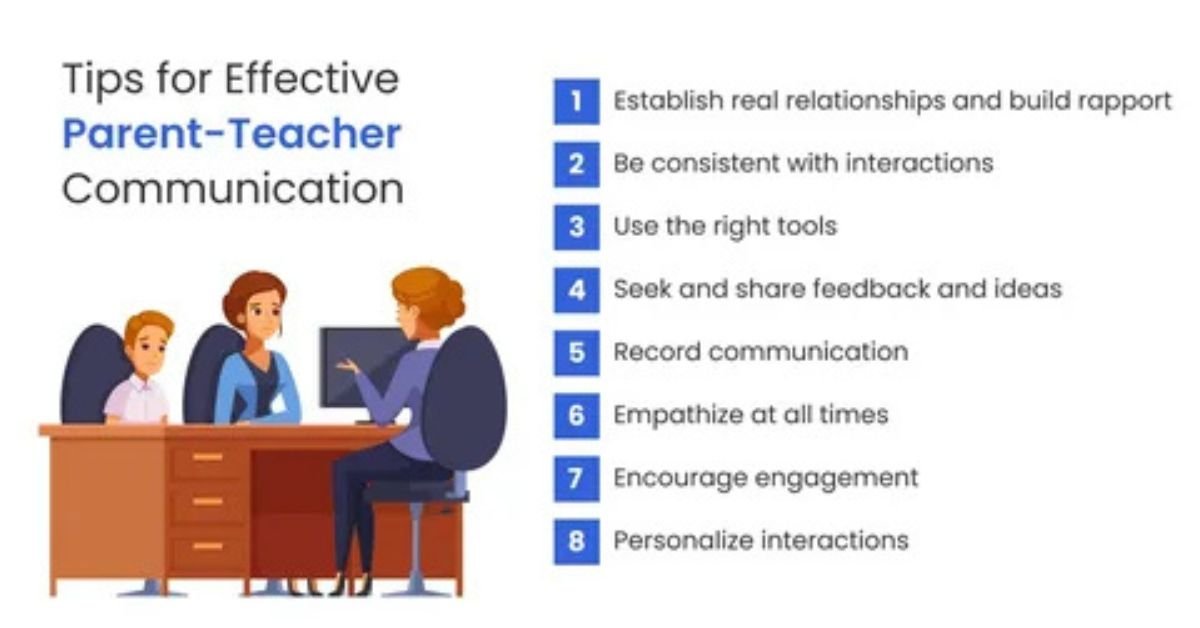
Parents and teachers play a big role in making lessons effective. Keep the learning environment positive and pressure-free. Celebrate small successes, like remembering three new opposite pairs in a day. Repeat words often, but in different situations to keep interest alive. Use a variety of methods. visuals, games, songs, and stories. to cater to different learning styles. Be patient and recognize that making mistakes is a normal part of learning. Encourage children to teach the words back to you, as explaining to someone else strengthens memory. Make sure opposite words for kids are a regular part of reading time and playtime. When children hear and use these words daily, they will soon master them naturally.
Conclusion:
Opposite words for children go beyond basic vocabulary lessons. They help kids understand contrasts, which enhances their thinking and communication skills. Learning opposites also supports reading, writing, and speaking from an early age.
The process is most effective when paired with games, stories, visuals, and real-life experiences. Parents and teachers can create a rich environment where children hear and use these words daily. With creativity and patience, kids not only remember opposites but enjoy discovering new ones, giving them a lifelong tool to grow their language skills.
FAQs:
What are the opposite words for kids?
Opposites for children are word pairs with entirely different meanings, like hot versus cold or up versus down.
Why should children learn opposite words?
They help children understand contrast, improve vocabulary, and make communication clearer.
How can I make learning opposites fun?
Use games, songs, stories, and real-life examples to make lessons engaging.
At what age should kids start learning opposites?
Most children can start around age three, using simple pairs from daily life.
Can opposite words be taught without books?
Yes. You can teach them through conversation, play, and everyday activities.

Aoon Abbas is an experienced SEO expert dedicated to helping businesses grow through data-driven strategies, keyword optimization, and effective digital marketing.



Leave a Reply